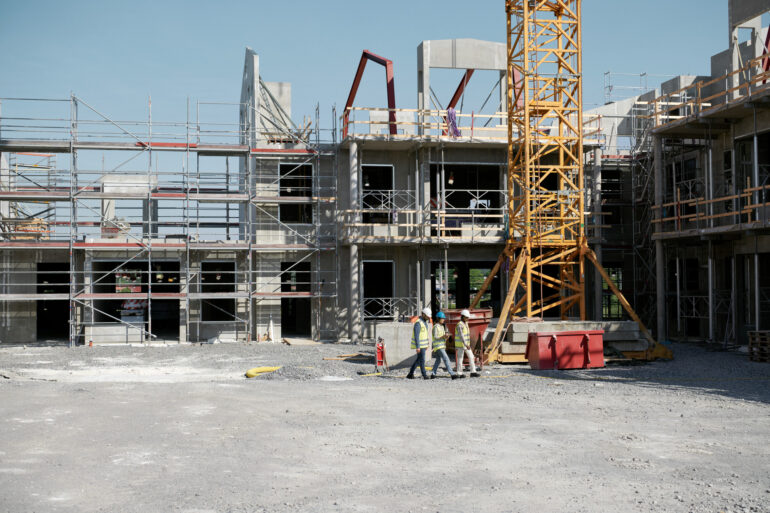

Data centre growth is causing delays in housing delivery across London, a report from the London Assembly Planning and Regeneration Committee has found.
The committee said growing electricity demand, including from expanding data centres, is putting extra strain on the city’s power grid.
This is making it harder to build new homes, especially in West London where areas like Hillingdon, Hounslow and Ealing have already reached grid capacity.
Since 2022, new housing developments in these areas were put on hold because the grid could not cope.
The Greater London Authority worked with National Grid and Ofgem to put in short-term fixes, connecting over 12,000 homes by early 2025.
However, the report warned that long-term power needs, especially from sectors like data centres, will require better planning.
Data centres are expected to grow their energy use by 200% to 600%.
A single data centre now needs as much power as tens of thousands of homes.
These big demands on the grid are making it more expensive and difficult to build new homes and could affect London’s economic growth and ability to meet housing targets.
The committee called for policy changes to help balance energy and development needs.
It recommended a separate use class for data centres so their energy needs can be managed more clearly.
The committee also said the Greater London Authority should include a specific data centre policy in the next London Plan.
Other recommendations included asking the Greater London Authority’s Infrastructure Coordination Service to publish its data centres forecasting project results quickly, and for the Mayor to prioritise retrofit funds for social housing and key infrastructure to help lower energy bills for low-income households.
James Small-Edwards, chair of the London Assembly Planning and Regeneration Committee, said: “London is at a critical moment, with energy capacity becoming a real constraint on both housing delivery and wider economic growth.
“Through this investigation we heard from councils, developers and residents about the delays, uncertainty and long-term risks posed by ongoing grid constraints.
“As demand for power rises, particularly from large energy users like data centres, we need a clear, strategic and long-term approach.”
Small-Edwards added: “The recommendations we’ve set out are an essential step towards managing these pressures fairly and ensuring London has the infrastructure it needs to support new homes and a growing economy.”