Report warns lack of affordable housing is locking families into poverty
The report, sponsored by the Family Building Society, argues that private rents are too high for lower-income families, contributing to rising homelessness.


A shortage of social and affordable housing is locking families into poverty and damaging their health and wellbeing, according to a report by Professor Christine Whitehead of the London School of Economics and Kelvin MacDonald of the University of Cambridge.
The report, sponsored by the Family Building Society, argues that private rents are too high for lower-income families, contributing to rising homelessness.
It states that house prices and rents have been rising faster than earnings, leading to an acute shortage of affordable housing in many regions, particularly in London and the South East.
The authors question whether the Government’s target of 1.5 million homes will be met, arguing that current policy is heavily concentrated on new-build housing and the planning system.
“This concentration on new-build and, in particular, on the operation of the planning system is a key factor affecting the supply of housing with, for example, increasingly long timescales from application to decision,” the report stated.
The authors noted that a previous report published in July 2025, also sponsored by the Family Building Society, recommended scrapping Stamp Duty for older people, taxing short lets and second homes, and treating private landlords as normal profit-making organisations. They said that none of these recommendations were adopted.
The latest report said housing affordability is widely recognised as one of the most significant issues facing households, particularly those with limited resources or previous housing problems.
It added: “The major issue in understanding affordability is that no dwelling is exactly like any other.
“Dwellings differ in terms of types, age, number and size of rooms, availability of outside space and location. No dwelling is exactly like another and value is difficult to assess.
“Rising house prices, for example, have different effects on different groups as well as different attributes between dwellings.”
The report also highlighted structural challenges within the housebuilding sector, including capacity constraints, unimplemented planning permissions, skills shortages in construction and public sector planning, and the financial position of housing associations.
It stated that many sites are stalled because there is no contract in place with a registered provider for the affordable housing element, alongside concerns about the financial viability of schemes in some parts of England.
The authors added that the cost to local authorities of meeting statutory duties to house homeless households is significant, limiting their ability to fund non-statutory services.
“At the limit, the problem is not simply affordability but actually ensuring a roof over peoples’ heads,” the report concluded.
Related

Family Building Society backs affordable and social housing fund

Borrowers turn cautious as remortgages rise, Family BS finds
Discounted Market Sale homes could unlock stalled housing sites without public subsidy – Savills

Family Building Society reintroduces 60% LTV products, cuts rates by up to 30bps
Family Building Society launches HNW interest roll-up mortgage
Family Building Society relaunches fixed rate mortgage range
Fifth of Gen Z would move further for affordable homes as deposits fall – Barclays

Mayor streamlines draft London Plan to boost affordable housing

FTB support must be matched by increased housing supply, says RICS
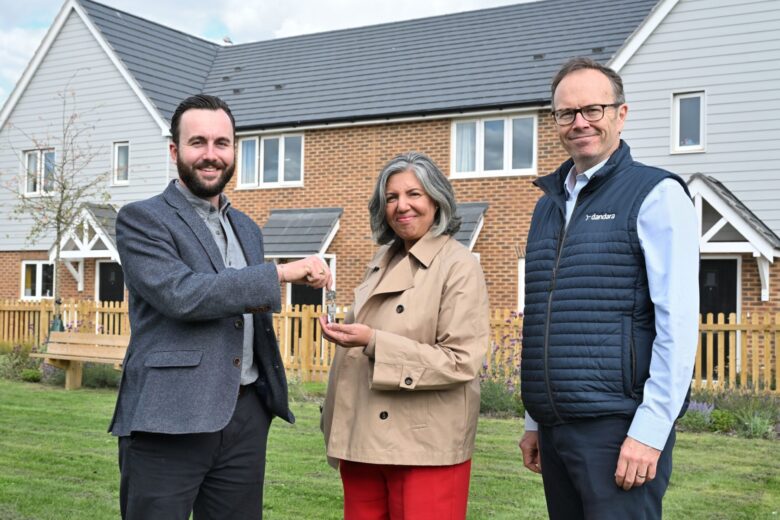
VIVID completes 16 affordable homes in West Wittering

Codi Group launches £750m contractor framework to support Welsh housing projects