Project 28 marks first anniversary with focus on faster property transactions
Around 100 senior leaders, media and government representatives came together to discuss the changes being implemented to create faster transactions.


The property industry convened yesterday, Thursday 10th September, for a panel event marking the one-year anniversary of the launch of Project 28: A Charter for Faster, More Certain Property Transactions.
Around 100 senior leaders, Project 28 Charter members, industry professionals, media and government representatives came together in London to discuss the changes being implemented across the sector to create faster, more certain property transactions.
Moderated by Financial Times Consumer Editor Claer Barrett, the panel brought together Derek Burt, director of home operations at Lloyds Banking Group; Ben Davidson, managing director at AConveyancing; Verona Frankish, CEO of Yopa; and Travis Scholes, chief commercial officer at LMS.
The event took place as the Government moves forward with its home buying and selling reform.
In June, the Ministry of Housing, Communities and Local Government (MHCLG) published its reform roadmap, setting out plans to make transactions faster and more reliable through measures including greater upfront property information, standardised sales packs, improved digital data sharing and more streamlined processes.
The discussion centred on three connected themes: what upfront information means in practice, how bringing information forward can allow the transaction to be re-sequenced, and what effective collaboration looks like between lenders, conveyancers, estate agents and technology providers.
Panellists shared examples of how some of these principles are already being tested in practice across the industry.
These included the digital homebuying service being developed by LMS, Lloyds Banking Group and Connells Group to capture and reuse key information across a transaction; AConveyancing’s use of upfront property intelligence to identify potential risks earlier; and Yopa’s pilot of an upfront legal pack before a property is marketed.
The panel also explored how bringing the relevant property data, legal information, identity and source-of-funds checks, lender requirements and risk indicators forward could help identify issues sooner and enable more activity to happen in parallel.
Opening the event, Simon Brown, CEO of Landmark Information Group, said: “One year on, The Project 28 Charter is moving from commitment to delivery, with practical approaches being tested to make property transactions faster, more certain and less stressful for consumers.
“The Government’s home buying and selling reforms give us a real opportunity to build on that momentum. Industry and government now need to work together, learn from what works and turn these approaches into changes that can be adopted at scale.”
Derek Burt, director of home operations at Lloyds Banking Group, added: “We have an incredible opportunity to simplify the home buying and selling journey, making it easier, faster and better for customers.
“By bringing technology and innovation to the process, we can take the friction out of one of life’s biggest transaction”
Ben Davidson, managing director at AConveyancing, added: “The way that conveyancing is conducted currently needs a radical overhaul, we now have immediate access to data, which can be instantly assessed allowing us to conduct legal due diligence early.
“As a conveyancing firm it allows us to measure the risk and complexity to bespoke the conveyancing process and further remove delay by ensuring the property is legally ready to be sold.”
Verona Frankish, CEO of Yopa, said: “Selling my own home has given me the opportunity to experience the transaction through the eyes of a customer and test the impact of completing more of the legal preparation upfront.
“Bringing this work forward can help identify issues earlier, create greater transparency and give everyone more confidence in the transaction.
“The Project 28 Charter is important because no single part of the industry can fix this alone. If we genuinely want faster, more certain transactions, we have to redesign the journey around the customer and work together to make it happen.”
Travis Scholes, commercial director at LMS, added: “When stakeholders can share, consume and reuse data more effectively, we remove unnecessary friction, reduce duplication and unlock better outcomes for everyone involved, particularly buyers and sellers.
“The infrastructure exists to support that change. The focus is now on accelerating connectivity and adoption across the industry so trusted information can flow more effectively and deliver real impact at scale.”
Related

e4 Strategic joins Project 28 Charter

Property transactions risk stalling as buyers wait for Budget, warns expert

CentreMove begins processing live property transactions

ClearPath AI launches platform to connect mortgage, property and legal transactions

MA Lawyers adopts Compass Concierge to manage land tax on property transactions

Residential property transactions fall 2% in July – HMRC
Property transactions fall by 2% in July – HMRC

Property transactions rise by 2% in June – HMRC
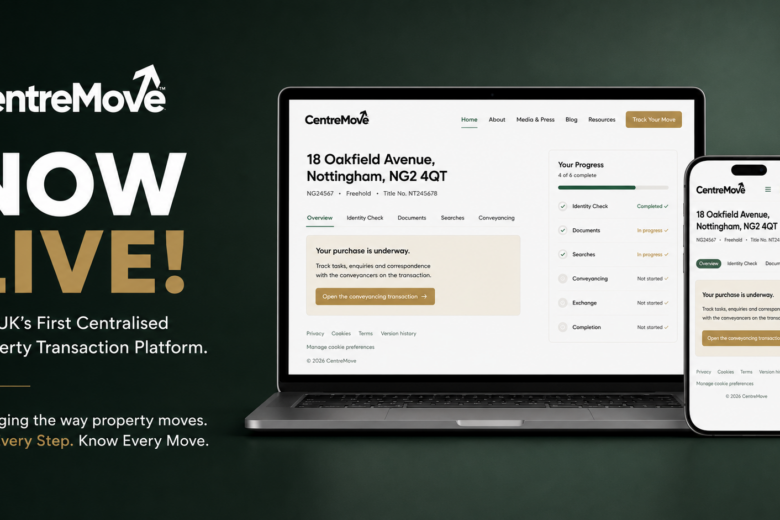
CentreMove launches platform to give real-time updates on property chains

Landmark launches Sales Pack Ready to provide upfront property information

Conveyancer numbers fall as exchange times reach 123 days, data reveals