House price to income gap falls to 11-year low – Lloyds
The average home cost 7.3 times average earnings, down from 7.6 a year earlier and the lowest ratio since 2015.

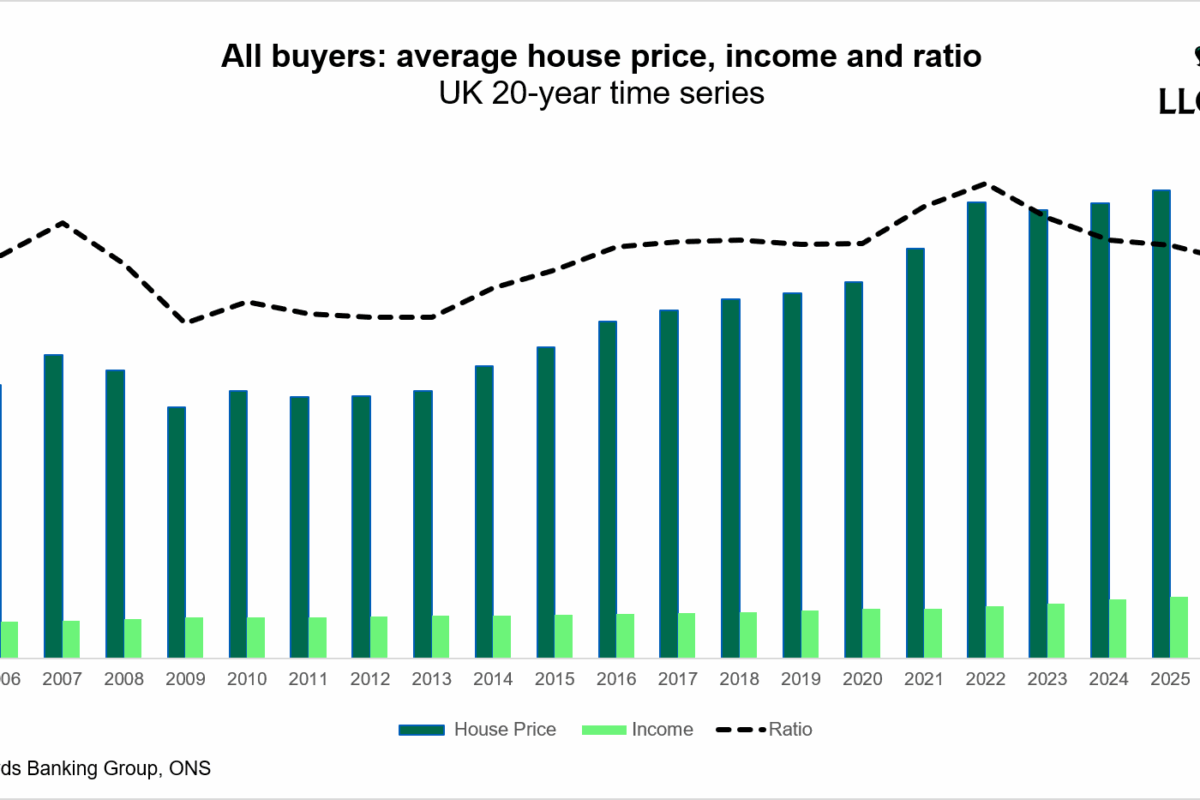
The gap between house prices and earnings narrowed to an 11-year low, research from Lloyds has found.
The average home cost 7.3 times average earnings, down from 7.6 a year earlier and the lowest ratio since 2015.
Average property prices rose by 0.5% to £299,131, while average earnings increased by 4.5% to £40,790.
However, higher interest rates pushed average monthly mortgage repayments from £1,100 to £1,157.
For first-time buyers (FTBs), the average house price rose by 0.3% to £239,681.
The house price-to-earnings ratio fell from 6.1 to 5.9, its lowest level since 2015.
A typical FTB still needed almost £24,000 for a 10% deposit.
Their average monthly mortgage repayment increased from £1,100 to £1,150 but remained at 34% of average monthly earnings.
Average rent rose by 3.2% from £1,339 to £1,382 a month, equal to about 41% of income.
Andrew Asaam, mortgages director at Lloyds, said: “There are some encouraging signs for people looking to buy a home.
“Wages have continued to rise while house prices have remained relatively stable, helping to narrow the gap between earnings and house prices.
“However, affordability remains stretched for many households. Mortgage rates are higher than they were a year ago and saving for a deposit continues to be one of the biggest barriers facing first-time buyers.”
Asaam added: “Buyers may have more options than they realise, including mortgages designed for those with smaller deposits.
“While these won’t be right for everyone, they can help some buyers take their first step onto the housing ladder sooner.”
The South East recorded the largest improvement, with the average home costing 9.1 times earnings, down from 9.7.
Greater London fell from 10.9 to 10.3, Eastern England from 8.7 to 8.2 and the South West from 8.2 to 7.7.
London and the South East remained the least affordable regions.
The ratio fell from 5.1 to five in the North East and remained at about 5.3 in Scotland.
It dropped from 6.5 to 6.3 in the North West and from six to 5.8 in Yorkshire and the Humber.
Northern Ireland was the only nation or region to become less affordable.
Inverclyde and Aberdeen were Britain’s most affordable local authorities, with homes costing 3.5 times earnings.
Kingston upon Hull, Blackpool and Dundee followed at 3.6.
Elmbridge was the least affordable at 17.4 times earnings, followed by Kensington and Chelsea at 17.3 and St Albans at 14.1.
Asaam said: “Where you buy continues to make a huge difference to affordability.
“Our recent research showed homebuyers can save 28% on average by looking just next door to the UK’s priciest postcodes.
“For first-time buyers in particular, a small shift in location could make a big difference – not just in getting on the ladder, but in what kind of property is within reach.”
Asaam added: “Many parts of Scotland and northern England continue to offer some of the best value relative to local earnings.
“For buyers with flexibility over where they live, that can make a meaningful difference to what they can afford.”
Ian Harris, president of NAEA Propertymark, said: “While the narrowing gap between house prices and earnings is encouraging, affordability on paper does not always translate into affordability at the point of purchase.
“Buyers are still facing higher borrowing costs and the challenge of raising a deposit, with many having to compromise on property type, location or budget.
“Location also remains crucial. Widening a search can unlock better value, but moving further from work, family, schools and support networks can bring additional costs and practical considerations that headline affordability measures don’t capture.”
Harris added: “For first-time buyers in particular, the challenge is not simply finding a property that looks affordable relative to earnings, but securing a manageable mortgage, raising a deposit and finding a home that works for everyday life.
“The latest figures show progress, but affordability remains a careful balancing act for many households.”
Related

Fowey tops house price growth for picturesque UK towns – Alto
House prices remain flat in September amid higher mortgage rates – Lloyds HPI

Northern Ireland house prices up 9.2%, data reveals

Four in 10 London flats resold at a loss, analysis finds

Preston is UK’s best place to sell a home, research finds

Homebuyer demand down 1.6% in Q3 – eXp

Average rents fall in nine UK regions in September – Propertymark

Almost one in 10 London homes would fall under £1.5m mansion tax threshold, Yopa finds

Brokers cite affordability checks as biggest barrier to expat lending – Suffolk BS

Letting agent use reaches two-year high among landlords, Pegasus Insight finds
Govt must review Shared Ownership income cap, says Pepper Money