
Interview: Finova
Jessica Bird speaks with Gareth Richardson, CEO at Finova, about the ambitious prospect of a fully connected mortgage market.


Gone is the mortgage market of old, relying on wet signatures and fax machines, personal relationships and brokers conjuring criteria off the dome. Not only can brokers check sourcing systems that span more criteria than one person could hold in their head in a matter of seconds, but digital communications alone have revolutionised the work of mortgage broking.
Now, as artificial intelligence (AI) reaches its digital feelers into every aspect of our lives, this market has the opportunity to fundamentally change how property finance is sourced, processed and serviced.
Realising that ambition will require changes to established workflows, industry collaboration, vastly improved data sharing and – perhaps counterintuitively – a renewed focus on the value of human advice. The Intermediary spoke with Gareth Richardson, CEO at Finova, to understand whether this is possible, and what must be done to get there.
Lofty ambitions
Richardson has been in the CEO seat at Finova for a little over a year. His foundations are in software engineering, and having worked across varied industries, he brought a fresh mindset to the finance sector, which led him to be instrumental in moving UK banking into the cloud and revolutionising core banking tech.
He strikes a good balance between sitting outside the market enough to avoid the risk of getting set in its ways, while also having a solid grounding in all things finance – from regulation to the problem of legacy systems.
Richardson says: “[I have] rolled out digital banking, but also transformation systems to move people from old legacy mainframes into cloud native core banking that runs personalised products and personalised structures. We spent a long time trying to solve the problem of how the consumer actually gets better services, better products. It’s a rethinking of how products work.”
The goal to change how people engage with finance is not one to be taken lightly, and the mortgage market may be one of the hardest to pull out of the old ways. With 63 lenders and 2,500-plus brokers using its products, and one in five UK mortgages passing through its proverbial doors, Finova might just have the clout to make change happen.
Richardson says: “That makes for an ability to actually help customers and build some of these products, start driving for the future rather than being sat in the infrastructure layer trying to tell people what the future could be.”
Finova represents the scale to be able to make much-needed improvements to a market that is built around “unnecessary friction,” and to do it while standing astride both the lender and broker side.
“This gives us the ability to start looking at those silos, and understand what’s good for lenders and what’s good for brokers, which quite often is very similar,” Richardson explains.
Finova’s customers typically achieve around 1% to 2% straight-through processing. Even “the vanilla stuff” often requires human intervention.
Richardson’s ambition is for 90% of mortgage applications to be processed without human intervention. While this is a hard mountain to climb, it is achievable in theory, as while many applications are relatively simple, the technology and workflows supporting them are unnecessarily complicated.
“You have broker tech providing them with better capability, but they can’t bridge the gap into the lender side and tie those things together,” he explains. “We’re looking at bringing those things closer together while making brokers’ lives easier, so they can give a better experience to customers. We can also give lenders the ability to do things faster, quicker, and fundamentally serve customers better and bring better products to market.
“Technology has a huge enabling capability if it’s done right, and it can also be a massive barrier if it’s done badly.”
From broker tech to origination systems, Finova is looking to bring the market together and create a fully end-to-end connected process. The final frontier of this is conveyancing, which Finova also recognises as a challenge for the industry.
Rather than going direct to conveyancers, as it has with broker and lender tech, Finova is partnering with firms like LMS and PEXA to “drive that market into a better approach.”
When Richardson joined in June 2025, the business was in the final stages of a year of work to integrate the MSO business, which it acquired from Iress in 2024.
Finova has also acquired Cubit Labs, an AI tech company focused on intermediary workflows and compliance, with “a lot of really focused people who’ve been in the industry a long time.” Richardson’s job is now to bring these various teams together under the Finova banner, with a shared vision and strategy.
In the meantime, this has been a defining year for the technology market, and change has only accelerated during Richardson’s tenure.
“When I turned up, AI in mortgages was a trend that we knew we should be looking at,” he says. “By Christmas, it was real and making an impact. During that time, we’ve hired more than 50 people in Manchester to grow our AI hub. That’s building jobs in the UK, with apprenticeships as well, so that we can have an ecosystem that’s healthy.”
Interoperability
Brokers have access to any number of tools to help them do their job day-to-day. The issue is not access to technology, but whether that tech delivers on its promises to create a more efficient advice process. The missing piece, Richardson says, is interoperability.
Application programming interfaces (APIs) have so far been the central tool. However, these are still limited, Richardson explains: “APIs have tried to save brokers a load of time, but when a set of APIs will only work for these 10 lenders, it doesn’t work across the industry. A broker’s workflow needs to change depending on which lender they’re going to talk to. And those APIs will only go three-quarters of the way. They’ve still got to go to the lender portal anyway. At that point, quite frankly, as a broker I can’t be bothered. I’m just going to go to the portal, because you’re going to send me there anyway.
“Therefore, you’ll take 20 minutes on a case keying it in, if you’re lucky. If you’ve got adverse credit or other complexities, then it’s an hour and a half to three hours. If that lender says no, the process starts again.”
Finova recently launched its Broker Hub, an AI-powered platform including its whole-of-market tool ‘Agentic Apply’, which takes the rekeying burden off brokers’ hands, leaving the world of cobbled-together APIs in the past.
“It’s ‘AI, not API’, which means that we can do end-to-end, full flow, any lender – we’ve trained it across all of them,” Richardson says. “That 20 minutes goes away. The machine does it for you. It then gives it back to the broker to review, because it’s their case. We’re not taking that away, we just make it easier.”
Richardson says this should be “invisible,” and that neither brokers nor lenders will need to change their workflows or platforms.
The next challenge will be convincing the brokers themselves. As with many new advances, there are early adopters and sceptical laggards.
“Let’s take the demographic of brokers in the UK,” Richardson says. “You have 30% or 40% skewing towards the later end of their career. They can do all the complicated cases, they have great relationships with their customers built over a long period of time, and can advise on lots of different complicated property types. They’ve got their workflow. It’s become really honed over the years, and they know how they’re going to execute it. Then you’ve got a younger cohort that doesn’t have the same experience or track record, and who need more support.”
In general terms, while the more established cohort may be less willing to disrupt the existing status quo with new tech – especially if they feel previous evolutions have failed to deliver – the younger section may be more likely to factor AI into their everyday lives.
This is where Richardson sees great room for change, using AI to not only streamline admin tasks for these brokers, but to help train up the next generation.
Broker Hub’s multi-DIP capability allows brokers to submit to several lenders simultaneously, lessening the potential reliance on a smaller selection of trusted lenders and helping them consider all the options available in the pursuit of good customer outcomes.
Richardson says: “The reason [a broker] goes to one [lender] is because it’s a huge drain of time, and they know they will get the answer they need. Whereas this way, it’s a lot less of a drain of time, and you can put it out to more lenders and see what results come back.”
Filling in the gaps
The Broker Hub is an example of the kind of connective tech available now. Richardson has an even more ambitious vision for the future of the market. For example, where some specialist lenders struggle to gain visibility through traditional sourcing systems, these tools could create a more nuanced approach, which will in turn have an impact on competition.
Richardson says: “I’ve spoken to lots of [lenders]. Lots think that multi-DIP would be better for them as they get to complete more business, but they also recognise that this could start screwing up some of their data that they work on today, and their metrics. So, there’s a potential change in the industry because of just that one little thing.”
Longer-term, he believes this tech could be instrumental in bringing criteria further forward into the sourcing process, as well as reducing the reliance on in-person meetings and roadshows in order to tout particular products on an individual and varied basis.
Future iterations of this technology could vastly improve the chance for comprehensive product matching and intelligent sourcing.
“It’s not a place we’re in today, but it’s a place that’s perfectly doable with the technology that we have,” Richardson explains.
“We don’t need to invent something new, and we don’t actually really need to change regulation, although that would help in certain cases, like property information. If you’ve got smart property data, you can pull that in straight away. It will raise questions about what the DIP actually brings to the industry, at that point. We’ve got to work all those things through over the next couple of years.”
The other place where he sees tech revolutionising the market is compliance and training. Where previously, compliance checks and training might include a human being taking the time to listen to a proportion of calls – with varying degrees of effectiveness depending on their skill and attentiveness, or even the time of day – AI can take a more standardised approach.
Finova is developing AI-based analysis of broker calls, which can be assessed against standards of good practice, identify individual strengths or weaknesses, help brokers spot product blindspots or missed questions. It can even be used to flag where a case should be routed to a different broker with specific skills.
Richardson says: “This is not about Big Brother, it’s about saying ‘this guy is doing brilliantly at this, but doesn’t understand that’.
“We see a lot of calls where one customer will come in with a complex case, the broker will pick it up because they’re the next person available. It doesn’t matter if they’re able to do it because the form on the front is just very simple. They will put it out to one lender that they think might do it, it comes back with a no, and they’ll move on to the next case because it’s too hard.
“That’s bad for the industry, it’s bad for the customer, it’s bad for service and support.
“So, we need to be able to train them, and we need to be able to understand that this call was complicated and it should be routed somewhere else. The first person should shadow someone else for these types of cases.
“Analytics, backed by good rules around what’s good and what’s bad, is available today. We can do this now. Previously, you’d have to listen to every call – take senior, experienced people off their own desk to do so.
“Technology enables people to be better and to serve customers better, and get training that is very specific to them.”
While the AI tool is spotting gaps and training opportunities, it can also be pre-filling a preliminary fact-find with the information the broker is eliciting from the client, identifying gaps that might need a follow-up.
Richardson continues: “It’s assistive. It’s about helping brokers based on what ‘great’ looks like for that organisation, not generically.”
For compliance purposes, this means checking 100% of calls to the same high standard, and using these analytics to inform improvements and training.
Connecting the dots
Finova has a hand in CRMs, broker connectivity, origination and mortgage service, giving it an advantage. Richardson says that tech firms have, traditionally, improved individual parts of the market, without properly connecting them.
While technology is not solely responsible, it has contributed to the fragmented property purchase process that plagues UK buyers.
The story is an old one: borrowers submit documents multiple times to different organisations, undergo repeated requests for proof of income and ID, and are left with their heads spinning by disparate communications across different parties seemingly incapable of getting on the same page.
Richardson envisions a future where information is verified once and reused throughout, with shared certification and agreed industry standards. He points to the work of the Open Property Data Association (OPDA) as part of the solution to this admittedly thorny problem.
To really work, change must come from both the industry and policymakers.
Richardson says: “The smart property data initiative has a real chance of changing a huge amount of how we look at this, because we’ll have certified trusted property information.
“This is where there’s a role for Government. If it wasn’t so politicised, digital identity would be a key cornerstone, open finance would be a key cornerstone – not open banking, where people have to register and don’t know who they’re giving their information over to.
“That must then be backed by property data that runs through the whole piece, with digital ID tied to a title on a property, we’d cut out a lot of delays.”
Better sourcing and more comprehensive financial and property data will smooth the process for borrowers, improve the initial quality of applications and reduce the need for corrections and additional work, while wider data analytics could help lenders refine their propositions based on the realities of the borrowers they are trying to reach.
Richardson says: “A better quality of applications means lenders can give more certainty to the answer earlier, which then puts pressure on lenders to implement straight-through processing, and compete in unique spaces to carve out that makes them different.”
The idea of earlier criteria matching, straight-through processing and one-time document verification will be music to the ears of anyone who has bought a house. But data-led decisioning sounds, to many brokers, a lot like a door being closed on them.
Richardson is clear, though, that their role will not disappear.
“Financial education is very low across the UK in general,” he explains. “It doesn’t matter how old or how young you are, there’s a bunch of different major financial periods in your life that people just do not understand. They need brokers’ help.
“We can do some of this with tech, but really what we’re doing is enabling people to have better conversations and help those customers in a better way.”
There is a clear distinction to be made between AI supporting professional advice and customers relying on their own interactions with AI to answer questions without appropriate safeguards.
This is one of the future challenges Richardson sees the industry tackling – sooner rather than later, considering that AI is becoming ubiquitous.
Ultimately, brokers are not paid for their ability to navigate lender portals.
Richardson concludes: “We’ve got this intersection of regulation and tech coming together that will affect the market, but [brokers have] a fundamental role to make sure that no one’s given a bad product.
“When the broker isn’t having to key in a case, chase a BDM and argue about whether the lending policy is correct and see whether they’ll underwrite it or not, they’re able to make sure that it’s the right product.
“At the moment, they do a really tough job of trying to determine what the lending policy is, sometimes through divination. Let’s fix that and leave them to do the really good stuff of educating and supporting the borrower.”
Related

Finova and Leeds Building Society partner to roll out AI application tool

Boon Brokers adopts Instamo FastSubmit to streamline mortgage submissions

Wesleyan moves 100 mortgage advisers to upgraded Sourcing Brain platform

Modernising lender matching will transform SME financing

Axium partners with Loans Warehouse to integrate second charge mortgage sourcing
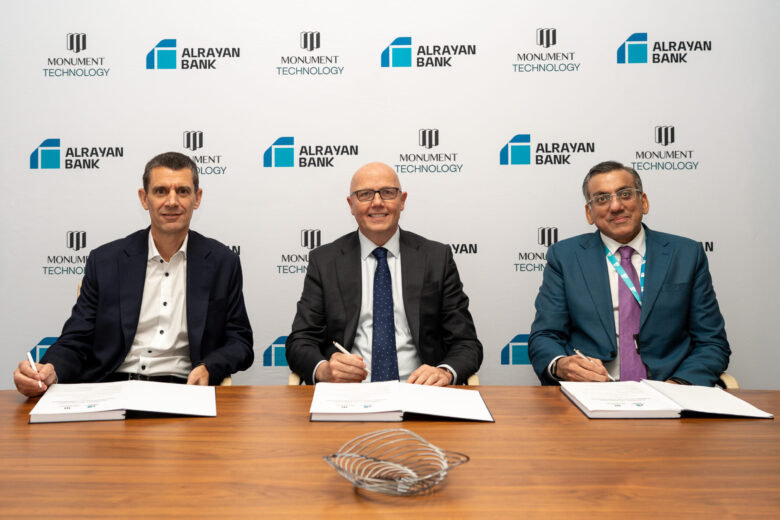
AlRayan Bank announces largest-ever technology investment in Monument partnership

W.A.L.T. appoints Michael Fairhurst as commercial director

Monmouthshire Building Society migrates £1.36bn mortgage book to Phoebus

Stonebridge My Mortgage Partner app hits 10,000 users in first five weeks

Adviser IQ integrates property data into CRM

Precise issues day one remortgage offer through new residential platform
