Lower London housing target could cost £41bn in economic output, Pegasus Group warns
The draft London Plan proposes a target of 558,000 homes over the next 10 years, more than 300,000 below the Government's original target of 880,000.

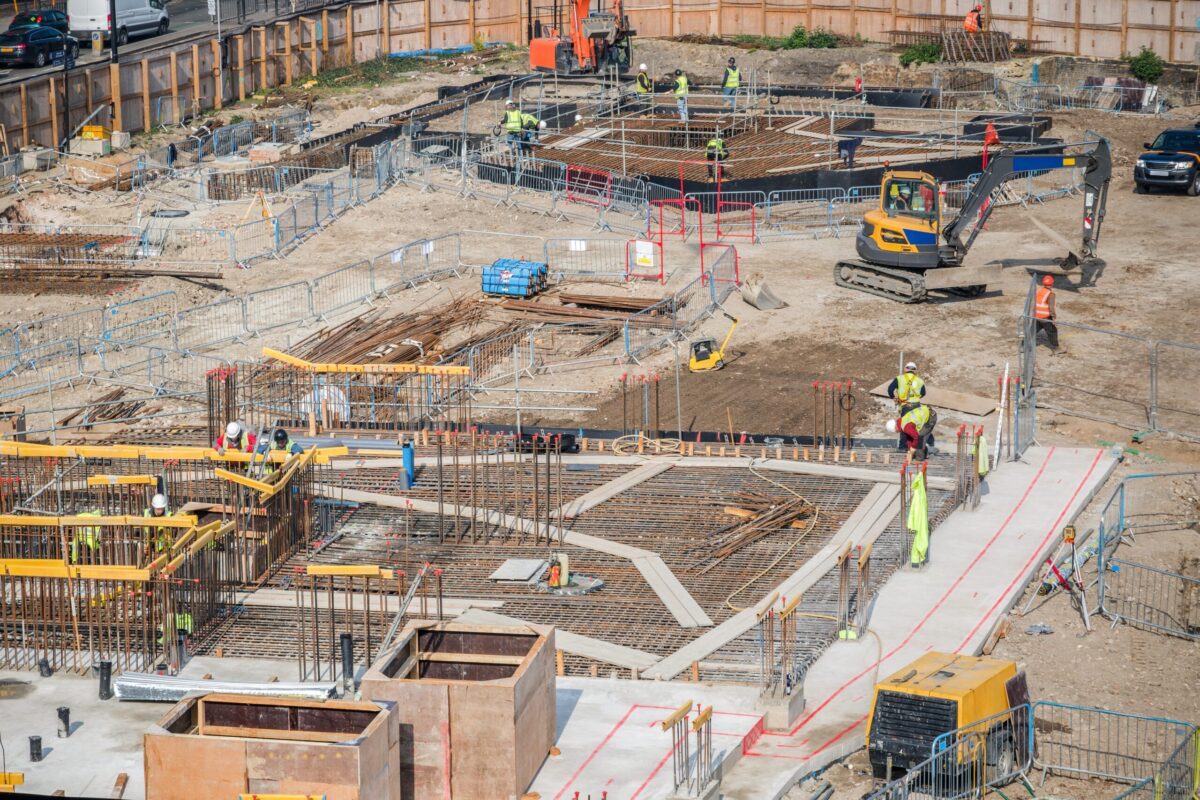
Reducing London’s housebuilding target by around 300,000 homes could result in £41bn less economic output each year, analysis from Pegasus Group has suggested.
The draft London Plan, released for consultation in July, proposes a target of 558,000 homes over the next 10 years, more than 300,000 below the Government’s original target of 880,000.
Pegasus estimated that the additional homes could have accommodated approximately 762,000 residents, of whom 412,136 would be economically active and have the potential to support £41bn of economic output annually.
The development consultancy also estimated that the lower target could result in £69.6bn less construction investment over 10 years.
According to the analysis, this investment could have supported 25,400 direct construction jobs and a further 52,800 roles through supply chains and the wider economy.
The construction of the additional homes could also have generated £8bn in gross-value-added (GVA) each year, equivalent to £80.6bn over the 10-year period.
Pegasus estimated that delivering 300,000 fewer homes could result in London house prices being almost 16% higher than they otherwise would have been if demand for housing remained strong.
Chris Wheaton, senior director in the economics team at Pegasus Group, said: “As our analysis clearly shows, housing and growth are intrinsically linked, and nowhere more so than in London.
“The opportunity cost of the London Plan delivering 300,000 fewer homes than the Government’s target extends far beyond homes lost.
“A potential £80bn in lost economic productivity over ten years is a startling figure, but one that is essential to understanding the capital’s vital role in building national economic prosperity.”
He added: “Supporting housebuilders to build, whether through ambitious targets, policy reform or targeted funding, ultimately feeds into our country’s bottom line.
“And although there are some opportunities to absorb homes in surrounding areas, these neighbouring regions are already struggling and can’t cover all 300,000 – so many will get lost for good.
“While it is fair to say that the Mayor of London has leaned towards realistic delivery, the fact is that falling short of assessed housing needs will constrain the capital’s growth potential.
“The consequences will be felt across a broad range of economic and social indicators, from labour supply and healthcare provision to tax revenues, local authority finances and wider societal outcomes.
“Existing homeowners and London residents will also feel the effects, as persistent supply shortages continue to place upward pressure on house prices and borrowing costs.”
Wheaton said: “It is positive to see the Great London Authority’s campaign for better infrastructure and more affordable homes, and we welcome the added clarity that the draft London Plan has brought developers.
“But to boost housing delivery policymakers will need to consider alternative solutions.
“These range from increased investment in transport infrastructure to unlock development opportunities, utilising grey belt land, and considering greater density of dwellings in appropriate suburban areas.
“At a time when economic growth is paramount, the economic and social price of failing to deliver sufficient housing is simply too high to ignore.”
Related

Brokers cite affordability checks as biggest barrier to expat lending – Suffolk BS

CapitAll Finance joins the BDLA

Rely helps first-time landlord secure funding after previous lender decline
BDLA confirms final line-up 2026 Annual Conference

Paragon Bank provides £3.8m development finance facility for Bath conversion

SDKA increases BTL title indemnity insurance loan limit to £250,000

Air and Mortgage Brain partner to support holistic later life lending advice

Step One Finance adopts OMS loan origination platform

HTB appoints Mia House to lead internal BDM team

Simplybiz Mortgages and FIBA add six lenders to specialist property finance panel

BTR investment surpasses £900m as volumes reach record high in Q3 – Savills