
The Interview… Darren Deacon, head of intermediary sales at Family Building Society
Darren Deacon, head of intermediary sales at Family Building Society, discusses its recent HNW interest roll-up mortgage launch and opportunities for growth.

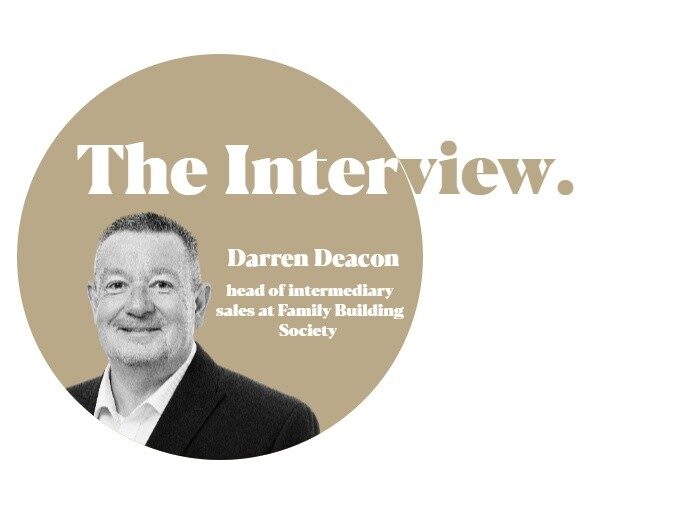
The Intermediary speaks with Darren Deacon, head of intermediary sales at Family Building Society, about the launch of its HNW interest roll-up mortgage and opportunities for growth.
What prompted Family Building Society to launch its high-net-worth (HNW) interest roll-up mortgage?
We believe that this is a fabulous opportunity for brokers who have HNW clients needing significant finance. They may have complicated, non-standard income streams. Typically, their assets, including pensions, commercial and residential properties and other investments are not liquid and they either cannot, or do not wish to, sell in the short term to fund a standard repayment or interest only loan.
Private banks have long been seen as the default lender for these scenarios and we at Family saw an opportunity. Bearing in mind our intermediary reach and significant expertise in dealing with complex borrowing, we felt that now is the right time to make this product available to a much wider market.
Which borrowers is the product aimed at, and what gap in the market does it address?
The launch reflects our commitment to supporting brokers whose wealthy clients are looking for sensible and considered underwritten solutions that address their more complex financial circumstances. The product is designed for HNW individuals whose wealth may be tied up in investments, property or other assets rather than regular income. It addresses a gap in circumstances where borrowers have the means to repay but do not fit traditional affordability models that mainstream lenders demand.
Also, we provide a tailored, case-by-case approach where standard mortgage processes may not be appropriate. We feel that the result is a more personal, transparent and reassuring lending experience for brokers and their clients.
Applicants can access borrowings of between £1m to £12.5m. They must have a net annual income of at least £300,000 or net assets of £3m or more. Mortgage terms are capped at 10-years for properties worth up to £10m and 5-years for higher-value properties. Loans are offered where the maximum loan-to-value (LTV) is 65% based on the projected final loan balance at the end of the term. The product is supported by Family Building Society’s ‘Service Promise’ which commits the society to providing a dedicated business development manager (BDM), a specialist lending panel and a dedicated senior underwriter.
We believe that our interest roll-up product and Service Promise provides brokers with added confidence when placing applications for these HNW clients.
What should brokers consider when deciding whether an interest roll-up mortgage is suitable for a client?
Brokers should ensure there is a clearly understood repayment strategy and that the product aligns with the client’s longer-term financial objectives. It is particularly important to consider suitability, the impact of rolled-up interest and any alternative borrowing options that might be available.
The initial reaction from brokers has been very positive. So far, we have offered significant loans to sophisticated self-employed entrepreneurs who feel now is not the time to sell assets and for whom rolling up the interest makes perfect financial sense.
What feedback have brokers provided since the Mortgage Hub launched, and how has it improved the application process?
Following the launch of our new improved Mortgage Hub earlier this year feedback has been very positive, particularly around greater transparency and improved visibility of the progress of mortgage applications.
From the outset we wanted to design an enhanced online application platform in order to make it easier and faster for brokers to manage mortgage cases from a Decision In Principle (DIP), to an application right through to completion of the offer and loan.
The Mortgage Hub has reduced the need for manual updates, making it easier for brokers to track applications and manage client expectations. The platform is helping brokers manage cases more efficiently while continuing to give them access to the personal service and manual underwriting they expect from us.
What further technology and mortgage origination improvements does Family Building Society plan?
We believe that advances in technology and the expectations of brokers are interlinked. The Mortgage Hub and the positive reaction we have had from brokers is a case in point. But we don’t intend to rest on our laurels. As with most technological improvements much of the work is behind the scenes, so naturally we will continue to make significant investment in our backend systems and processes that further enhance the experience both of our mortgage brokers and their clients, as well as our savings customers.
The society has also recently made changes to its new build criteria, and how will they affect borrowers and brokers?
We have significantly expanded our support for would-be borrowers who wish to acquire new build properties. This includes lending up to 80% LTV on new build flats as well as offering our Family Mortgage at 100% LTV and increasing lending on our Joint Borrower Sole Proprietor (JBSP) product 90% LTV.
These enhancements give brokers more options for clients purchasing new build properties and help more borrowers to become home owners without needing to save for a larger deposit, which is particularly helpful as the cost-of-living crisis persists.
What role could the Government’s Your First Home scheme play in improving access to homeownership? Are there any parts of the scheme that lenders or brokers may find difficult to navigate?
The Government’s proposed revival of a Help to Buy scheme is a step in the right direction but not a solution to the housing crisis, according to former Liberal Democrat MP and Cabinet Minister in the 2010 to 2015 Coalition Government, Sir Vince Cable.
The Chair of the Housing Policy and Delivery Oversight Committee, which is sponsored by Family Building Society, has given the new scheme qualified support on the understanding that it addresses past deficiencies and doesn’t price other buyers out of the market.
According to Sir Vince, the previous Help to Buy scheme had its faults. Namely increasing house prices and helping those who may not have needed the help. Sir Vince feels that hopefully the household income cap and local property price cap will address these issues. He also believes that, while it will get more houses built the scheme alone will not deliver the Government’s target of 1.5 million new homes.
At Family Building Society our view is that we must also make better use of the homes we already have by helping older owners move out of under occupied family properties. Reforming Stamp Duty, or introducing a Stamp Duty holiday which worked very well during the Covid lockdown, could unlock that supply.
How do you expect the later life lending market to develop, and where are the main opportunities for brokers?
The later life lending market is likely to continue growing as people work longer, hold mortgage debt later into retirement and seek greater flexibility in managing their finances. The biggest opportunity for brokers is helping clients understand the wider range of solutions now available beyond traditional mortgages and equity release. We look forward to reading the findings of the Financial Conduct Authority’s (FCA’s) consultation paper specifically on later life lending. The focus of the report may very well mean it becoming a mainstream product and not seen as a niche area.
In fact, we are finding that attitudes to later life borrowing are changing and brokers tell us that too. The “champagne” moment of becoming mortgage free at the end of a typical 25-year loan is fast ceasing to become a reality for many first time buyers. Today’s first-time buyers (FTBs) are likely to be coming into retirement or indeed in retirement and later life before the end of their mortgage term.
The main opportunity for brokers is to take an holistic approach to their clients’ financial planning in retirement. Working with their clients’ financial advisers to help mitigate inheritance tax, for example, by taking out a new mortgage on a mortgage free property has many benefits. This needn’t be a retirement interest only (RIO) it could be a JBSP, Bank of Mum and Dad, or increasingly popular a reverse, Bank of Son and Daughter JBSP. Or those in retirement borrowing against occupational and private pension schemes and even the State old age pension to free up some cash.
The brokers who seek to innovate and educate their clients on what later life lending really means to financial well being in retirement presents them with significant opportunities.
What are Family Building Society’s main priorities for the remainder of 2026 and into 2027?
The answer to this is simple. Delivering the products and the more flexible lending criteria that the market wants and brokers can advise on. The recent launch of the HNW interest roll-up mortgage is a case in point.
Aside from our core range which delivers for older borrowers and corporate and private landlords we have very many more ideas up our sleeve for 2027 and beyond – watch this space!
Where do you see the biggest opportunities for brokers working with borrowers whose circumstances do not fit standard lending criteria?
Borrowers and would-be borrowers’ needs and wants are becoming more complex. Opportunities are strongest among self-employed applicants, later life borrowers, HNW individuals, professionals and those with multiple or non-traditional income sources.
Brokers who can identify these needs and match clients with specialist lending solutions will continue to add significant value in the market.
Related

Family Building Society launches HNW interest roll-up mortgage

The Interview… Lee Williams, national sales manager at Saffron for Intermediaries

Family Building Society launches ‘Mortgage Hub’ for brokers

The Interview… David Bentley, head of residential at Bidwells

Family Building Society enhances affordability assessment to increase borrowing capacity
Family Building Society relaunches fixed rate mortgage range

Family Building Society appoints Seb Mrotzek as COO

NRLA Mortgages launches exclusive limited company deal with Family Building Society

Family Building Society members expect economy to slow as cost-of-living concerns rise
Family Building Society cuts 2-year fixed mortgage rates by up to 0.20%

The Interview… Matt Staton, head of residential at Real Estate Management (UK)
